Table of Contents
Mold Remediation in Springdale, Arkansas: Fast Facts
The process for mold remediation in Springdale, AR, is determined by the event that caused the water damage. Sudden, accidental events are typically covered by your standard homeowners’ policy, though coverage for mold may be subject to sub-limits. Slow, progressive events and maintenance-related events are excluded from coverage. We help you quickly identify early signs of mold growth so you can alert your insurance company of the damage prior to mold remediation and protect your coverage.
Key Takeaways
- There are a few indicators that it is time to consider professional mold remediation for a Springdale home.
- Identifying moisture sources and contamination is the first step in a remediation process.
- Arkansas doesn’t have any state laws specifically regarding mold, so there are no required disclosures relating to mold.
- Mold inspections for homes in Arkansas can range from $300 to $700.
- There are several factors that can impact the length of a mold remediation project.
Signs That You Need Professional Mold Remediation
There are a few indicators that it is time to consider professional mold remediation for a Springdale home. If there are visible mold patches and a musty, lingering odor, remediation is likely necessary. Homeowners should be wary of “free” inspections by mold remediation companies, as they may be presented with a conflict of interest, according to MoldInspectorsNearMe. There are no state-level mold inspector licenses in Arkansas, so homeowners should verify a professional’s certifications by organizations like the IICRC. Once signs of a mold issue are identified, a qualified remediation team will have a structured process to remediate and remove the mold and restore the home.
What Professional Mold Remediation Includes
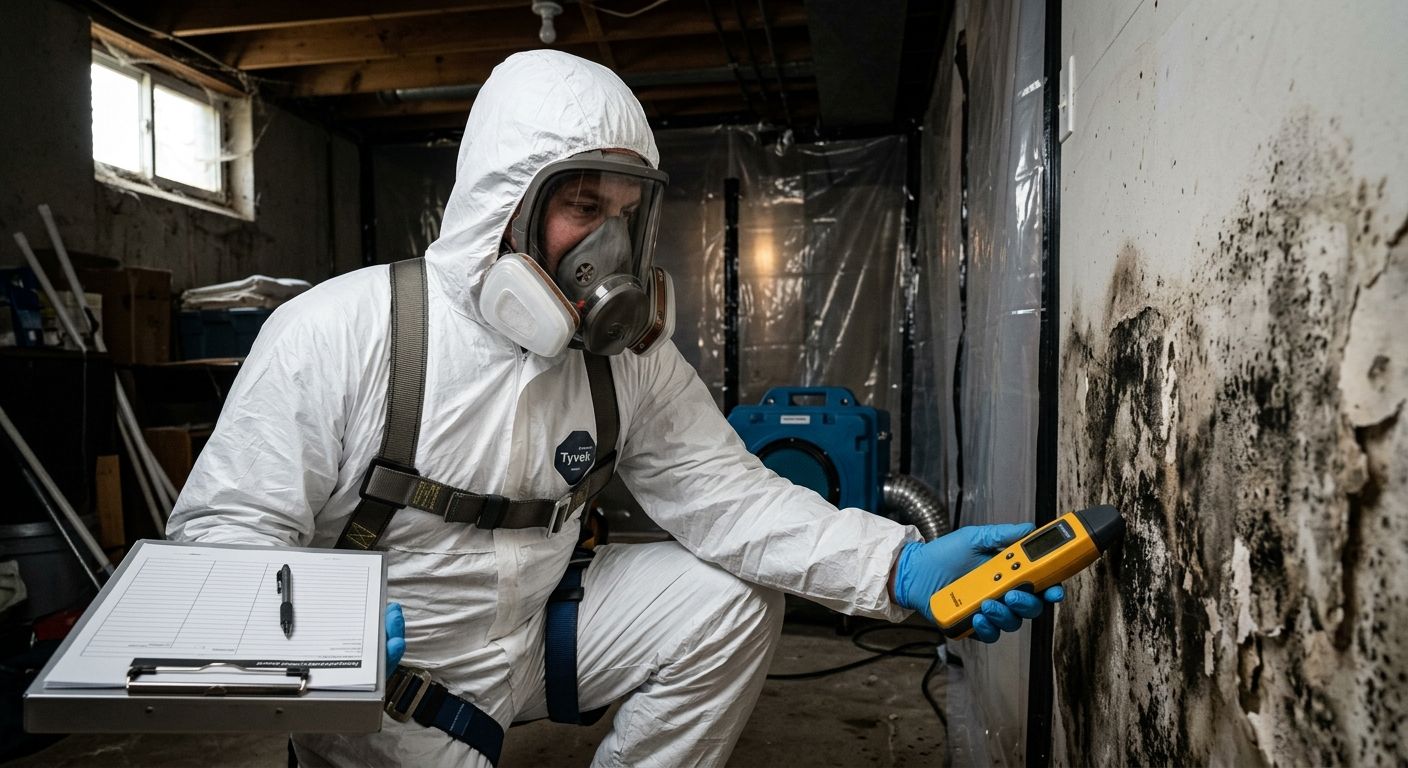
Identifying moisture sources and contamination is the first step in a remediation process. Our certified technicians in Fort Smith, AR and surrounding service areas then execute a plan based on industry protocols.
Certified technicians are the base of quality remediation. According to the Restoration Industry Association (RIA), the Certified Mold Professional (CMP) credential requires five years of hands-on experience or three of supervisory experience, prerequisite training, and a capstone project. Technicians inspect for biological, chemical, and fire-related residues to achieve a complete cleanup.
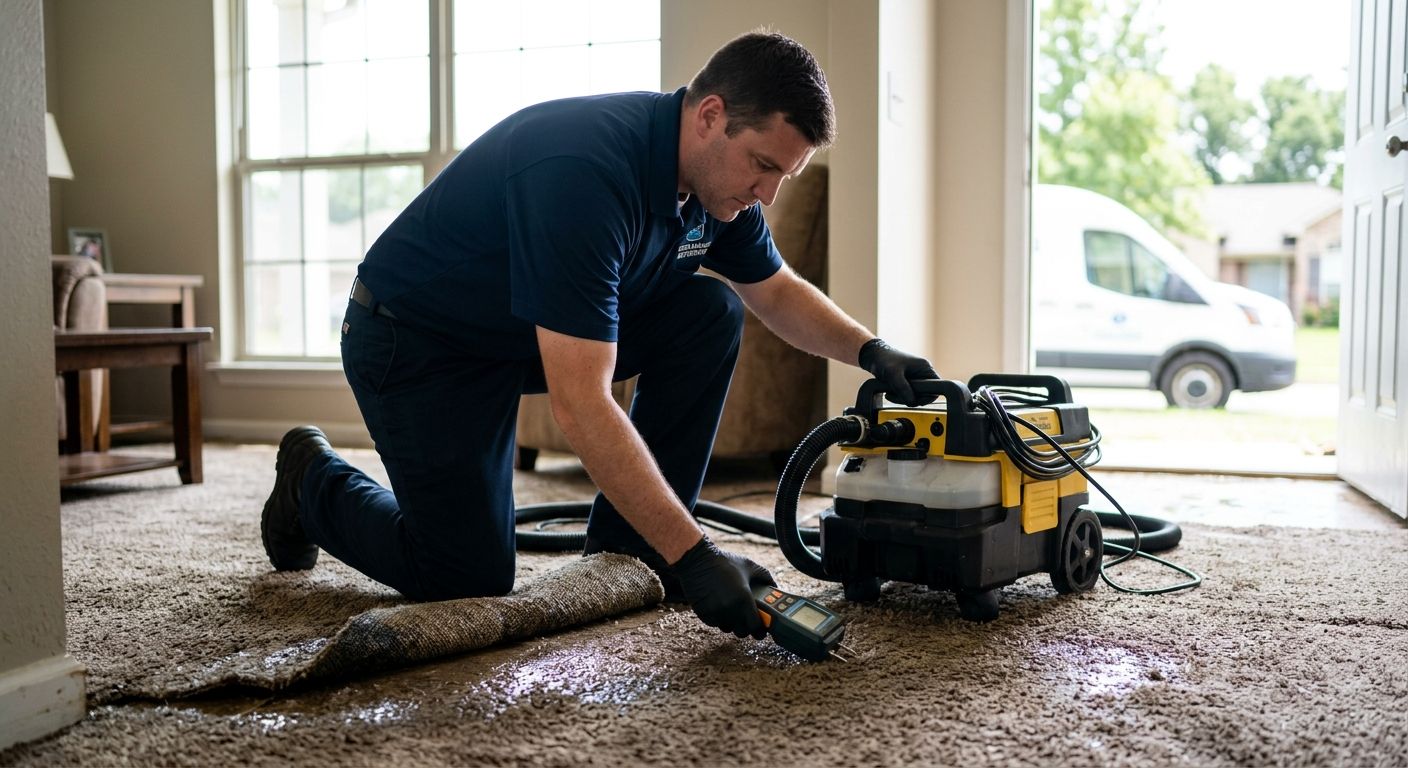
Thorough documentation is crucial when filing an insurance claim. Lookmold.com emphasizes that homeowners in Arkansas can expect mold-related coverage only when the mold is caused by a “sudden and accidental” water event; gradual water leaks are excluded. We provide our clients with thorough documents (moisture and mold readings, photos, etc.) to validate and speed up the processing of their insurance claims.
Knowing these components aids property owners in making an informed decision between professional remediation and do-it-yourself methods.
Choosing Professional Mold Remediation vs. Do-It-Yourself
Once you understand what a thorough remediation involves, the natural question is whether to handle it yourself. We recommend considering several important factors. According to Mold Compass, Arkansas does not have a state-specific mold law or mandatory licensing for remediation contractors, so you should verify credentials independently. Safety risks, the extent of mold growth, and equipment costs often make DIY less suitable. If the affected area exceeds ten square feet or your HVAC system is involved, industry best practices advise calling a professional. We offer free assessments to help you evaluate the situation without pressure, allowing you to make an informed choice. Humidity and common building practices in NW Arkansas can also influence how mold behaves, so tapping local expertise often proves wise.
Local Factors Affecting Mold Remediation in NW Arkansas
Arkansas doesn’t have any state laws specifically regarding mold, so there are no required disclosures relating to mold. MoldCompass states that in Arkansas, tenants cannot withhold rent or recover repair costs associated with mold. They may, however, terminate their lease for cause, without penalty, if the landlord does not address a condition that materially affects the health and safety of the tenants. Landlords are still required to comply with the federal EPA requirements to disclose known lead-based paint hazards, if any, in pre-1978 rental properties.
For professional mold investigations, the state imposes licensing requirements. Laws.com details that since January 2010, anyone collecting fees for mold investigation must be licensed by the State Plant Board. The board can fine unlicensed investigators up to $1,000 per incident, and investigations must follow standards set by the American Conference of Governmental Industrial Hygienists (ACGIH). Notably, remediation contractors are not required to hold the same license, making a certified investigator’s report the critical step for verifying mold conditions.
From a home buyer’s perspective in NW Arkansas, priority should be placed on third-party mold inspection reports and verifying contractor credentials before a remediation is performed. The absence of state laws requiring disclosure of mold also affects how homeowners insurance claims are evaluated and settled. Extensive documentation often plays a critical role in how claims are settled and remediation is performed. The factors above influence how insurance companies determine coverage for remediation costs.
Mold Remediation Costs and Insurance Coverage in Northwest Arkansas
Mold inspections for homes in Arkansas can range from $300 to $700. Costs are usually based on the square footage of the home and how many samples are sent to the lab. Homeowners should avoid free inspections. In the state of Arkansas, there are no state-mandated licenses for mold inspectors. It is wise to check the credentials of the inspector to make sure they are either IICRC or ACAC certified.

Mold remediation is covered by homeowners insurance when the water source is sudden and accidental, such as a burst pipe. Homeowners insurance does not cover mold when it is caused by a gradual leak or poor maintenance. All covered claims face a sub-limit, which means the insurance company will only pay up to a certain amount.
1312 Restoration provides free assessments and works with State Farm and other major insurance carriers.
How Long Does Mold Remediation Take?
There are several factors that can impact the length of a mold remediation project. These include the size of the affected area and the level of contamination. Additional factors may include the use of containment barriers and the need to remove building materials. Clearance testing is conducted after mold is removed to confirm that the area is safe.
A professional on-site evaluation is the only reliable way to get an accurate estimate of project length. Our certified team in the Fort Smith area provides thorough assessments to determine the expected timeline for your property.
Common Questions About Mold Remediation
Understanding what your insurance covers and what qualifications matter can relieve much of the stress that follows a mold problem.
Does homeowners insurance cover mold remediation? Generally, homeowners insurance will only cover mold remediation when the water loss was a result of a sudden and accidental event, like a water line bursting. Coverage depends on policy language and the cause of the water event; insurance policies generally exclude mold remediation for gradual water damage, like a dripping water line or other maintenance-related water issues.
How much will my insurance company pay for mold remediation? Many insurance policies include a mold sub-limit that caps remediation payouts separate from dwelling limits. Sub-limits vary by policy, so check your declarations page to see the limit.
What is the most important thing I should do if I discover mold? Tell your insurance company right away to avoid denial of your claim. Take photos to document the mold before it is remediated. Stop any additional water intrusion.
What qualities should I look for in a mold professional? Look for a mold remediator that holds the certification of the Certified Mold Professional (CMP) through the Restoration Industry Association. This certification means they have met experience and training standards established by the Restoration Industry Association, indicating advanced technical competence.
Frequently Asked Questions
How do I know if I have mold in my Springdale home if I cannot see it?
A persistent musty odor is a common sign of hidden mold even without visible growth. Additionally, unexplained respiratory symptoms such as coughing or wheezing can indicate its presence. Professional inspectors use moisture meters and air samples to locate contamination, as noted by Arkansas Department of Health guidance.
Does homeowners insurance cover mold remediation in Northwest Arkansas?
Homeowners insurance covers mold remediation in Northwest Arkansas only when the water damage is from a sudden and accidental event, like a burst pipe. Gradual leaks, poor maintenance, and high humidity are typically excluded. Even covered claims are subject to a mold sub-limit that caps the amount the insurer will pay.
What are the signs that mold requires professional remediation services?
Visible mold patches and a persistent musty odor are primary indicators that professional remediation is necessary. The process is also advised when the affected area exceeds ten square feet or your HVAC system shows contamination. 1312 Restoration offers free assessments to evaluate the situation and determine if professional services are required.
Why is professional mold remediation necessary instead of just cleaning it myself?
Professional remediation is necessary because it addresses safety risks, hidden contamination, and often requires specialized equipment. Certified Mold Professional (CMP) technicians follow industry standards to contain and remove mold, preventing its spread. Additionally, 1312 Restoration provides thorough documentation for insurance claims, which DIY methods cannot offer.
Schedule Your Free Mold Assessment with 1312 Restoration
We provide free, 24/7 mold assessments for mold remediation in Springdale, AR; call (479) 977-1312 to schedule with 1312 Restoration.
Resources
- Understand Mold Damage Insurance Coverage in Arkansas
- Find Mold Inspection Cost Guide for Arkansas
- Learn Tenant Mold Rights and Responsibilities in Arkansas
- Get Certified Mold Professional Program Information
- Learn Mold Investigation Licensing Laws in Arkansas
- Understand Mold Coverage in Homeowners Insurance